Mobile Casino Design Drives Spending Disconnect Among Players
 Emily Patel
Mobile casinos have quietly redefined what spending feels like. What was once a deliberate action—handing over cash, entering card details, or even waiting for a transaction to process—has become instantaneous, seamless, and almost invisible. For players using apps tied to Apple Pay, Google Pay, or crypto wallets, the act of depositing money can take seconds, often without breaking the flow of the game.
That shift has changed more than convenience. It has fundamentally altered how players perceive spending.
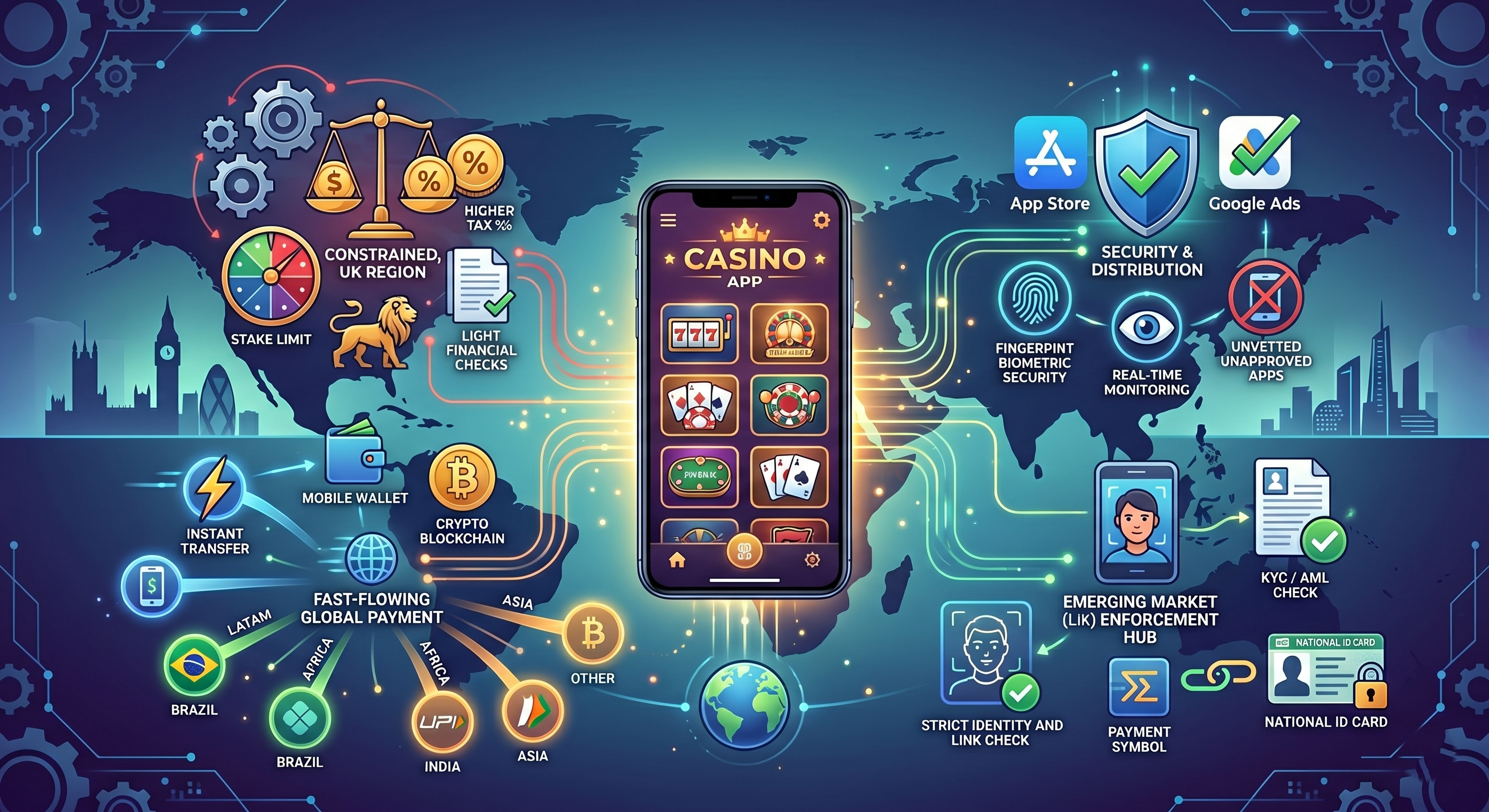
Across mobile-first markets—from the UK and Germany to fast-growing regions like Brazil and India—operators are optimizing for speed, retention, and frictionless play. The result is an environment where transactions are no longer experienced as financial decisions, but as part of gameplay itself. Over time, this creates a measurable gap between how much players think they are spending and how much they actually are.
This is not accidental. It is the outcome of design systems that prioritize engagement while reducing the visibility of cost.
Key Takeaways:
- Mobile casino design reduces friction, making spending feel less deliberate
- Digital currencies and chips abstract real-world value
- Instant payment systems remove natural pauses in decision-making
- Repetitive, small transactions accumulate into significant losses
- Continuous gameplay reduces awareness of time and total spend
The Shift From Payment to Interaction
In traditional gambling environments, payment is a separate action. It interrupts play, creating a moment of awareness. Mobile casinos remove that separation. Deposits, bets, and re-buys are integrated directly into the interface, often requiring only a tap.
This transformation turns spending into interaction. Instead of stopping to consider a financial decision, players continue engaging with the game. The difference is subtle but significant. When payment becomes part of the gameplay loop, it loses its psychological weight.
“Reducing friction in financial transactions increases frequency while lowering perceived cost.” — Deloitte Digital Media Trends
This principle is widely applied across mobile platforms, and casino apps are no exception.
Currency Abstraction and Value Perception
Another key factor is how value is represented. Players rarely interact with real currency directly. Instead, they see chips, coins, or crypto balances that do not map cleanly to everyday spending.
A €20 deposit might appear as 20,000 credits. A small Bitcoin transfer becomes a fraction of a token. These formats create distance between the player and the real-world value of their money.
This abstraction affects behavior. Studies in behavioral economics show that people spend more freely when using non-cash representations of money, as the emotional impact of loss is reduced.
“The less tangible money becomes, the less psychologically ‘painful’ it is to spend.” — Journal of Behavioral Economics
Over time, players stop thinking in terms of currency and start thinking in terms of game balance.
Speed and the Loss of Reflection
Speed is one of the most defining features of mobile casinos. Deposits through digital wallets or saved payment methods happen instantly. There is no delay, no processing time, and no interruption to gameplay. While this improves user experience, it also removes reflection.
In slower systems, even a few seconds can act as a checkpoint, giving players time to reconsider. In mobile environments, that checkpoint no longer exists. Decisions are made in the same moment as the impulse that drives them.
Payment Method | Average Transaction Time | Reflection Opportunity |
|---|---|---|
Bank Transfer | Minutes to hours | High |
Card Entry | 30–60 seconds | Moderate |
Mobile Wallet / Pay | Instant | Low |
Crypto Wallet | Seconds to minutes | Low |
As transaction time decreases, so does the likelihood of reconsideration.
Microtransactions and Accumulation
Mobile casino platforms rarely rely on large, one-time deposits. Instead, they encourage smaller, repeated transactions that feel manageable. A player might deposit €10 multiple times during a session without perceiving it as significant. However, those transactions add up quickly.
Scenario | Individual Spend | Frequency | Total Spend |
|---|---|---|---|
Single Deposit | €50 | 1 | €50 |
Repeated Micro-Deposits | €10 | 6 | €60 |
The second scenario often feels less impactful, even though the total is higher.
This is the core of the spending illusion. The structure of transactions changes how they are perceived, not just how they occur.
Continuous Play and Time Distortion
Mobile casinos are designed for uninterrupted play. Games load instantly, rounds are short, and there are no enforced breaks. This creates a continuous loop where players remain engaged for extended periods.
Within that loop, time becomes less noticeable. Research into digital engagement shows that continuous interaction reduces awareness of both time and cumulative activity. In gambling contexts, this directly affects spending.
“Flow-based environments reduce users’ ability to track time and cumulative expenditure.” — UK Gambling Commission Report
Without clear stopping points, sessions extend longer than intended, and spending follows the same pattern.
Crypto Casinos and the Additional Layer
Crypto-based mobile casinos introduce an additional layer of complexity. Cryptocurrencies are inherently volatile and often unfamiliar in everyday transactions. This makes it harder for players to assess value in real time. Spending 0.002 BTC does not carry the same intuitive understanding as spending €50, even if the value is equivalent.
This creates a dual abstraction:
- Digital representation (crypto instead of cash)
- Variable value (price fluctuations)
Together, these factors widen the gap between perception and reality.
Bonuses and Perceived Value
Bonuses further complicate spending perception. Deposit matches, free spins, and promotional offers create a sense of gaining additional value. Players often justify spending more because they believe they are receiving more in return.
However, these bonuses are structured to extend gameplay rather than reduce cost. Wagering requirements and conditions encourage continued engagement, which increases total spend over time. The focus shifts from cost to opportunity.
Industry Context
Metric | Insight |
|---|---|
Global mobile gambling market | Expected to exceed $150B by 2030 |
Mobile share of online gambling | Over 60% in major markets |
Average session length (mobile apps) | Increasing year-on-year |
Digital wallet adoption | Rapid growth in EU, LATAM, and APAC |
These trends show a clear direction: mobile-first, fast, and frictionless systems are becoming the standard.
Conclusion
The spending illusion in mobile casinos is not the result of a single feature. It is the product of multiple systems working together—speed, abstraction, repetition, and continuous engagement. Each element reduces the visibility of cost while increasing the ease of spending. Over time, this creates an environment where financial decisions feel less like decisions and more like part of the experience.
Understanding this does not eliminate the behavior, but it makes it visible. Because in a system designed to feel seamless, awareness is the only real point of control.
Sources:
- Deloitte Digital Media Trends Report
- UK Gambling Commission – Online Behavior Reports
- Journal of Behavioral Economics – Payment Abstraction Studies
- Statista – Mobile Gambling Market Data